

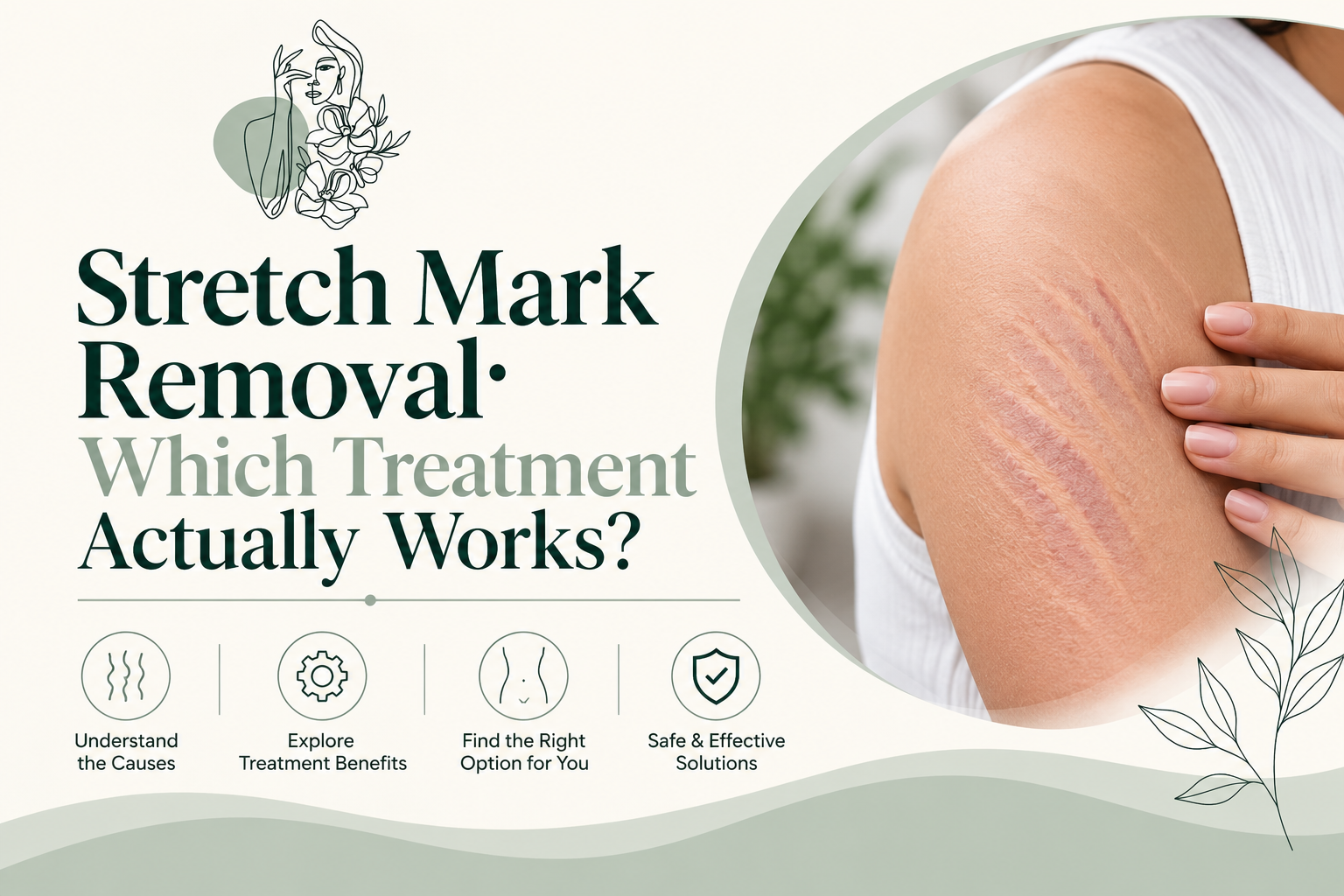
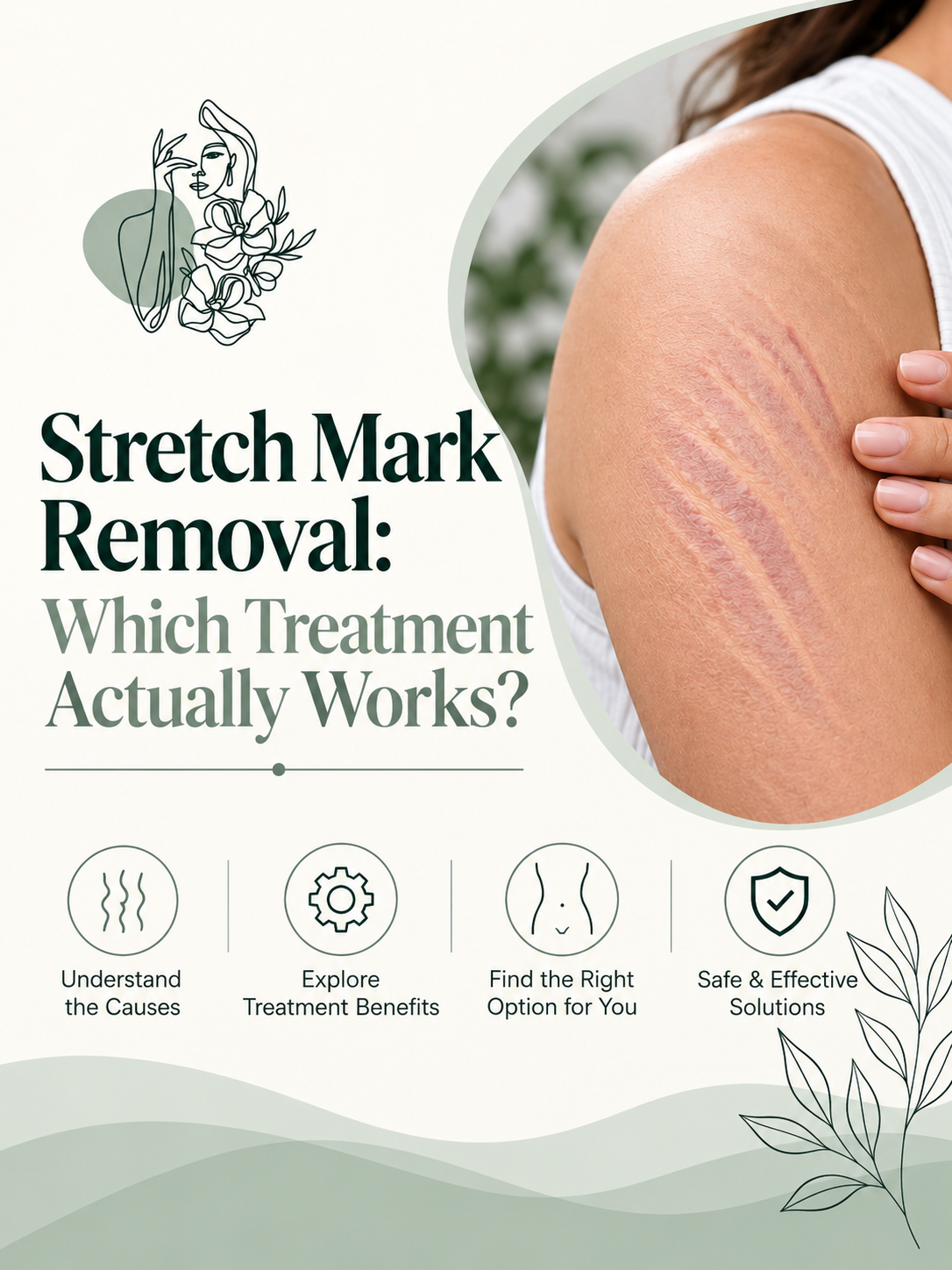
Stretch Mark Removal: Which Treatment Actually Works?
What This Post Covers
- You will learn why stretch marks form on the skin in the first place.
- You will see whether creams and oils can actually fade them.
- You will compare microneedling, laser, and chemical peels side by side.
- You will find out which treatment works best for new marks versus old ones.
- You will know when a stretch mark is not worth treating at all.
What Are Stretch Marks?
Stretch marks are thin scars that form when skin stretches faster than it can stretch back. They start as reddish or purple lines and slowly fade to white or silver over time. They show up most often after pregnancy, quick weight change, or a fast growth spurt.
Stretch Mark Removal: Which Treatment Actually Works?
You’ve tried three creams, a fancy oil, and maybe even a tub of cocoa butter, and those stretch marks on your stomach or thighs still look exactly the same. That’s not you doing something wrong. Most stretch mark removal treatment options sold online simply don’t do what the label promises.
Some treatments genuinely fade stretch marks, though, and knowing which ones have real proof behind them saves you money and disappointment. By the end of this post, you’ll know which treatments work, which are mostly marketing, and what to expect from each.
Which Stretch Mark Problem Matches Which Fix?
| Problem / Question | Root Cause / Reason | Answer / Solution |
|---|---|---|
| New marks look red, pink, or purple | Skin is still actively stretching and inflamed | Start with a dermatologist-guided retinoid or laser |
| Old marks look white or silvery | Scar tissue has fully matured and lost pigment | Microneedling or laser gives the best chance of fading |
| Marks appeared after pregnancy on the belly | Skin stretched fast during the third trimester | Wait past breastfeeding, then start active treatment |
| Marks are on thighs after weight loss | Rapid fat loss outpaced skin’s elasticity | Combination laser and microneedling works best here |
| Marks feel itchy or raised | Skin is still in an active healing phase | See a dermatologist before starting any harsh treatment |
| Cream used for months with no change | Topical products can’t reach the deeper scar layer | Switch to an in-clinic treatment for visible change |
Which Stretch Mark Removal Treatment Actually Works Best?
Laser and microneedling work better than creams and peels for most people, because they reach deeper into the skin.
Here’s how the main options actually stack up against each other.
| Treatment | How It Works | Evidence Level |
|---|---|---|
| Creams and Oils | Keep skin moisturised, may ease itching | Low, mostly helps comfort not appearance |
| Microneedling | Tiny needles trigger new collagen production | Moderate to good for texture and colour |
| Fractional Laser | Laser resurfaces skin and boosts collagen | Good, most consistent results in studies |
| Chemical Peels | Removes top skin layers to even tone | Moderate, works best on lighter marks |
Laser and microneedling come out ahead of creams and peels in almost every comparison, since they reach the deeper layer where the actual scar tissue sits. Creams can support the process, but they were never going to erase a scar sitting under the surface.
Why Do Stretch Marks Form in the First Place?
Stretch marks form when the collagen and elastin fibres under your skin tear from being stretched too fast for them to keep up.
Genetics play a real role here too. Some people’s skin simply stretches and snaps back better than others, even under similar conditions. Hormonal shifts, especially during pregnancy, also soften these fibres and make them more likely to tear.
Do Stretch Mark Creams and Oils Actually Fade Them?
Creams and oils mostly help with itching and dryness, not with fading an existing scar.
Moisturising the skin keeps it comfortable while it stretches, and that can lower the chance of severe marks forming in the first place. But once a mark has formed and matured, a cream sitting on the surface can’t reach the scar tissue underneath.
Retinoid Creams Are the Exception
Prescription retinoid cream, usually tretinoin, has some real evidence behind it, but only for new, still-red stretch marks. It does little for old, white ones. It also isn’t safe during pregnancy or breastfeeding, so timing matters a lot here.
How Well Does Microneedling Work for Stretch Marks?
Microneedling works by creating tiny, controlled injuries in the skin that trigger fresh collagen production.
Most people need four to six sessions spaced a few weeks apart to see a real change in texture and colour. It works on the stomach, thighs, arms, and other common areas, and it’s generally considered safe across different skin tones. Some clinics combine it with PRP, which uses your own blood plasma, for a stronger effect.
Can Laser Treatment Get Rid of Stretch Marks Completely?
No laser treatment removes stretch marks completely, but the right type can fade them a lot.
New Red Marks Need a Different Laser Than Old White Ones
Vascular lasers target the red or purple colour in fresh marks and calm that colour down early. Fractional and resurfacing lasers work better on older, white or silvery marks, since they focus on rebuilding collagen and smoothing texture rather than fading colour.
According to a review in the Journal of the American Academy of Dermatology, no single treatment removes stretch marks completely, though fractional laser and microneedling show the most consistent improvement in skin texture and colour.
Key Takeaways
- No cream, oil, or in-clinic treatment removes stretch marks completely.
- Laser and microneedling show the strongest, most consistent results.
- New red marks respond differently than old white or silvery ones.
- Retinoid cream only helps fresh marks, and it’s unsafe in pregnancy.
- Most treatments need several sessions spread over weeks or months.
Expert Note
In clinic, the biggest mistake is people waiting years before trying anything, then expecting one session to erase marks that took months to form. Older, whiter stretch marks respond much slower than fresh red ones, so patience and repeat sessions matter more than which exact device gets used.
When Stretch Mark Removal Treatment Is Not the Right Choice
If you’re currently pregnant or breastfeeding, most active treatments, including retinoids and lasers, are off the table until later. Very old, deeply pitted scars may only fade partially no matter how many sessions you do. Treatment also won’t stop new stretch marks from forming if your skin keeps stretching.
Stretch marks are stubborn, but they’re not untouchable. Creams help with comfort, while microneedling and laser actually reach the scar tissue underneath and fade it over time. The right stretch mark removal treatment for you depends on how old your marks are and where they sit on your body. Talk to a dermatologist before spending more money on products that promise miracles, and ask for a real treatment plan matched to your own skin.
Frequently Asked Questions on Stretch Mark Removal Treatment
What is the most effective stretch mark removal treatment?
Fractional laser and microneedling currently have the strongest evidence for fading stretch marks. Neither removes marks completely, but both rebuild collagen deep in the skin, which creams and oils simply can’t do. Results build gradually across several sessions.
Can stretch marks disappear completely on their own?
They fade on their own to some degree, usually turning from red or purple to a lighter white or silver over one to two years. They rarely disappear entirely without treatment, though the change in colour alone makes many marks far less noticeable.
Does microneedling hurt more than laser for stretch marks?
Both use numbing cream beforehand, so pain levels are usually similar and manageable. Microneedling can feel like light scratching, while laser for stretch marks often feels like small, quick snaps of heat. Most people tolerate either without major issues.
How many sessions does it take to see results?
Most people need four to six sessions for microneedling and three to six for laser, spaced several weeks apart. Visible change in texture and colour usually starts appearing after the second or third session, not immediately after the first one.
Are pregnancy stretch marks treated differently than other ones?
Yes, mainly around timing. Active treatments like retinoids and most lasers must wait until after pregnancy and breastfeeding are done. Once cleared, pregnancy stretch marks respond to the same treatments as any other stretch mark, based on how old and how faded they are.